
Customer reviews for tradesmen can help a homeowner decide whether to call a business they have not met. A review describes another person’s experience; a reply shows how the business communicates when the job is finished—or when something has gone wrong.
Reviews do not guarantee bookings, and a high rating cannot replace clear prices, suitable qualifications or a professional conversation. But a steady, honest set of reviews can answer the questions customers have before they send an enquiry: Does this business do the work I need? Did the customer feel listened to? Was the finished job what they expected?
Ask for reviews at the right moment
Choose a natural point after the work is complete and the customer has had a chance to check the result. Thank them, confirm any agreed follow-up and ask whether they would be willing to leave an honest review. Keep the request optional and easy to understand.
For example: “Thanks for asking us to fit the new kitchen. If you’re happy to share an honest review of your experience, here’s the link. No problem if you’d rather not.” You can adapt the wording to your trade, but do not tell the customer to write five stars or mention a reward.
Google lets businesses share a review link or QR code. Its review policy prohibits incentives—including discounts, free goods or services—in exchange for posting, revising or removing a review. Do not offer a prize draw, a cheaper call-out or a free extra in return for a rating.
Ask consistently and fairly
It is tempting to request reviews only from customers who have already praised you. That can leave a selective picture of customer experience and may make your process harder to manage fairly. A simple consistent step—such as offering every customer the same optional review link after completion—helps avoid choosing only people expected to leave a positive comment.
Never pressure a customer who says no, keep asking after they decline or suggest wording that hides a problem. Do not review your own business, ask staff to pretend to be customers or ask friends to describe work they did not receive. A review should reflect a genuine experience.
The UK Competition and Markets Authority’s fake reviews guidance explains the consumer-protection rules for reviews. The relevant unfair-commercial-practices provisions of the Digital Markets, Competition and Consumers Act 2024 took effect on 6 April 2025; see the official commencement regulations. If you publish reviews on your own website, read the guidance carefully and seek professional advice if you are unsure what steps apply to your business.
Make it easy without making it awkward
Send the link through the channel the customer already uses, if appropriate, and keep the message short. A handwritten card can work for a customer who prefers paper, but avoid printing a QR code that goes to an outdated or incorrect profile. Test the link yourself before giving it to customers.
Do not send repeated reminders. One polite request is usually enough; a second reminder, if you use one at all, should be gentle and not imply that the customer owes you praise. Avoid asking while a customer is under pressure to pay, approve extra work or resolve a complaint. The request should not feel like a condition of getting the service.
If a customer has a problem, deal with the service issue first. Do not make the review request part of a negotiation such as “we will fix it if you remove your review.” Resolving a genuine complaint is important in its own right; reviews should remain the customer’s independent account.
Reply to positive reviews like a person
A good reply is brief, specific and professional. Thank the customer for taking the time to write, mention the type of work if it is safe to do so and avoid exposing private details.
For example: “Thanks for taking the time to leave a review, Sam. I’m glad the new fence is working well for you, and I appreciate you choosing [business name].” Use the customer’s name only if it is already public in the review and you are comfortable doing so.
Do not paste the same long reply under every review. A repeated template can look automated. You can keep a simple structure, but tailor one sentence to the actual feedback. Avoid adding promotional copy or asking the reviewer to recommend you to others in every reply.
Respond to criticism without escalating it
Read a critical review carefully before replying. Check the job records and discuss the facts with anyone involved. If you made a mistake, acknowledge it plainly and explain the next step. If you disagree, stay courteous and avoid sharing the customer’s address, photos, payment history, health information or other private details.
An example response might be: “Thanks for letting me know you’re unhappy with the finish. I’d like to understand what happened and discuss a practical next step. Please contact me using the details on our profile so we can speak directly.” Adjust this to the situation; do not promise a remedy you cannot deliver.
Do not threaten, accuse or try to win an argument in public. If a review appears fake or violates a platform’s rules, report it through the platform’s official process and keep a record of the issue. A business should not try to remove a genuine negative opinion simply because it is uncomfortable.
Use reviews to improve your service
Look for recurring themes, not just the star average. Customers may repeatedly mention punctual updates, tidy work, clear explanations or difficulty reaching you. Those patterns can identify a process to improve, such as confirming arrival windows, explaining what is included in a quote or sending a progress update when a job takes longer than expected.
Keep a private note of feedback and any changes you make. Do not copy a review into an advert without permission, and do not edit the customer’s words in a way that changes their meaning. If you share a quotation on social media, get permission and identify it accurately as a customer’s comment.
Reviews can also help you understand which work customers value. If several clients mention a careful handover or a clean site, make that part of your service description—provided it reflects the way you actually work. If someone points out an issue, use it as a prompt to review your process rather than dismissing it as bad luck.
Help a potential customer make a decision
When a homeowner is comparing several businesses, a review profile is one part of the picture. Customers still need to know what you do, whether you cover their area and how they can contact you. Keep your business information current and use genuine work photos to show relevant experience.
Do not treat reviews as a replacement for a portfolio or a quote. A review about a bathroom refit may not answer whether you do emergency plumbing, and a customer may need an in-person inspection before a firm price is possible. Link reviews to a clear next step: “Message us to check whether we cover your area” is more honest than promising a quote from a star rating.
Our Google Business Profile guide for tradespeople covers review links and profile replies. For other ways to build local visibility, see free ways to advertise a trade business.
Read the words as well as the score. If customers consistently mention that they did not know when you would arrive, improve appointment updates. If they praise a clear handover, make sure every job ends with the same useful explanation. Do not publish a private response to a customer complaint or use a review to reveal a disagreement about payment; deal with those details through an appropriate private channel.
Keep the process safe and professional
Do not ask customers to include a home address, security details or another person’s private information in a public review. If they do, do not repeat it in your response. Keep review requests and replies in a business account where possible, and make sure anyone helping manage the page understands the rules.
If you collect customer details to send marketing messages beyond a service-related review request, the rules can differ by channel and purpose. The Information Commissioner’s Office explains how direct marketing and data protection apply to small businesses. Treat privacy guidance as part of your process and check current official advice where needed.
A straightforward review routine
When a job is complete, record that you offered the customer a review link. Keep the message neutral and send it once through an appropriate channel. Check the profile periodically, reply to new feedback and note any recurring service issue. Review the wording of your request now and then to make sure it remains optional and does not ask for a particular rating.
The aim is not to manufacture praise. It is to make it simple for customers who choose to share their experience, respond respectfully and learn from what they say. That is how customer reviews for tradesmen can support trust while keeping your reputation honest.
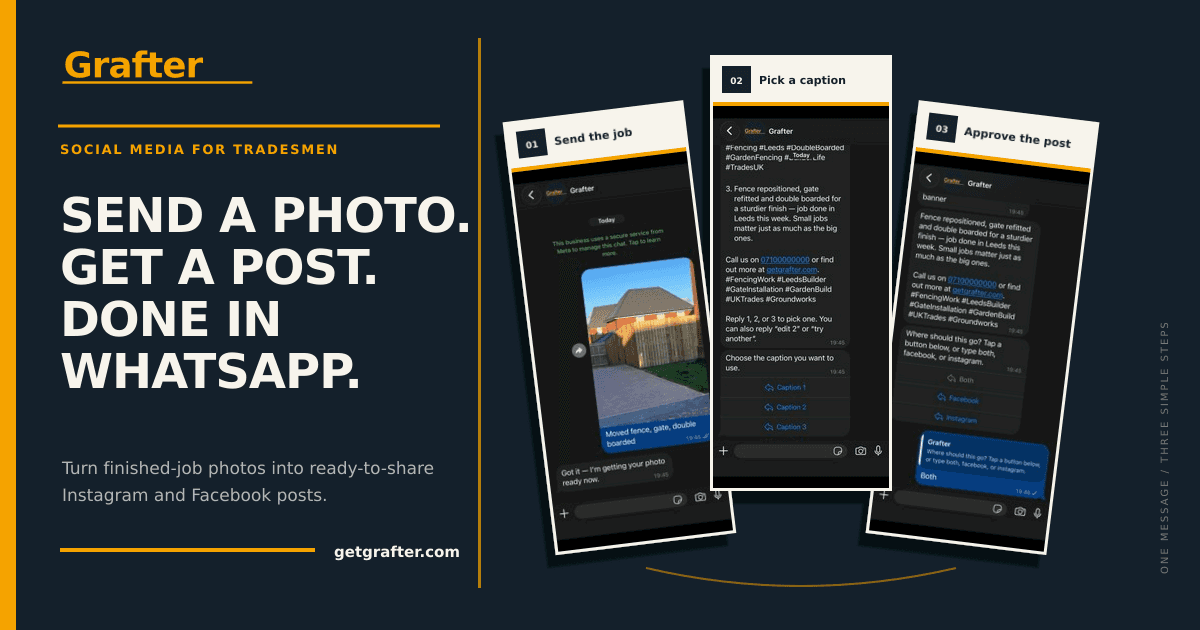
If you also share finished work online, Grafter can help draft Facebook and Instagram captions from a job photo and sentence over WhatsApp. Customer review requests remain yours to send, and should never be tied to a reward. Try Grafter on WhatsApp.