
If you've done a fencing job, a kitchen fit, a re-plaster, or a full extension, you've probably already taken the photo that proves you're good at your job. It's sitting in your camera roll right now. Most tradesmen never do anything with it — which means the single best piece of marketing they own never gets used.
Why before/afters work better than almost anything else
A before-and-after photo does something no amount of text can: it proves the transformation instead of describing it. Anyone can write "we do quality work." Not everyone can show a rotten fence panel next to a solid new one, or a cramped dated kitchen next to an open modern one. It's evidence, not a claim — and people trust evidence.
It also does the selling for you. Someone scrolling past doesn't need to imagine what your work looks like or take your word for it — they see it, in seconds, without reading a caption at all.
How to actually capture them (without slowing the job down)
- Before: one photo at the start, from roughly the angle you'll want to show the finished result from. Doesn't need to be posed — a quick phone photo before you start is enough.
- During (optional but valuable): a mid-job progress shot. This gives you a third post — useful for staying visible on the days you don't have a finished job to share.
- After: the same angle, good light if you can get it (early morning or late afternoon light does a lot of the work for you), no clutter or tools left in shot.
That's it. No professional camera, no editing skill needed — the transformation itself carries the post.
What to do with them once you've got them
A before/after photo posted with no context still works, but a short line of text — what the job was, roughly where (area, not full address), and anything worth noting ("double-boarded for a sturdier finish") — turns a nice photo into something that reads like proof of expertise, not just a picture.
Hashtags matter more than most tradesmen think: a handful of relevant ones (the trade, the area, the job type) is genuinely how people searching Instagram or Facebook for a local tradesperson find posts like yours.
The bit that actually stops most tradesmen
Taking the photo is the easy part — most tradesmen already do that without thinking. Writing the caption, picking hashtags, and remembering to actually post it before the moment's passed is where it falls apart, especially at the end of a long day.
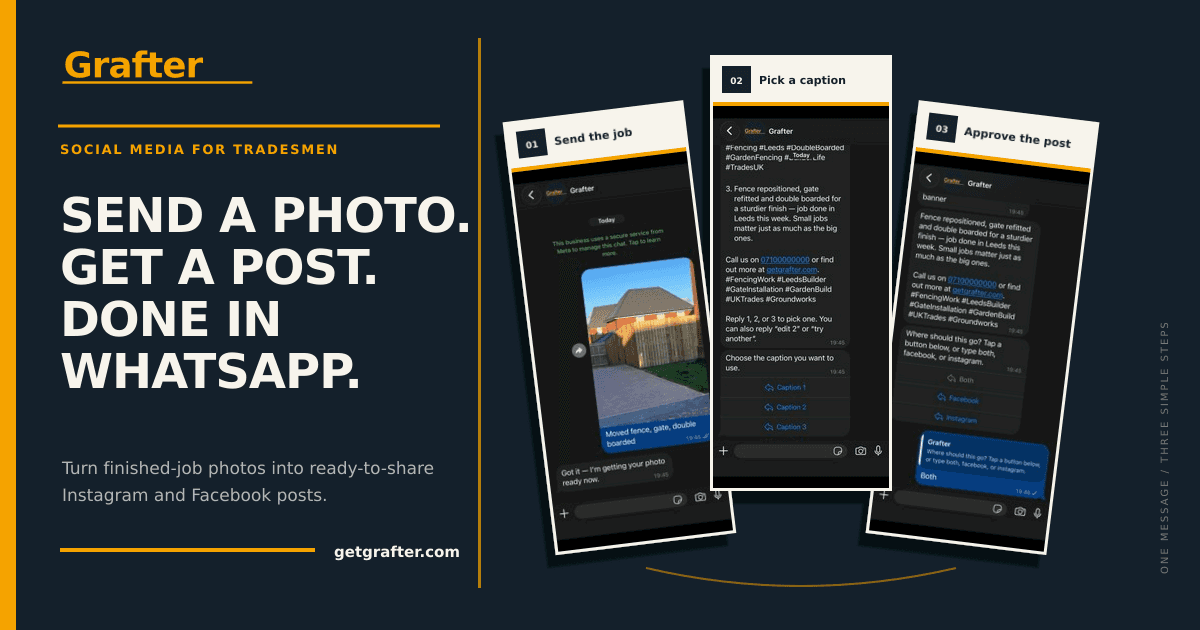
Grafter exists for exactly this gap: send the job photo on WhatsApp, and it writes you caption options and hashtags pulled from the actual job, ready to approve and post to Facebook and Instagram. Your camera roll is already a portfolio — this is just the bit that gets it in front of people. Try your first 5 posts free.